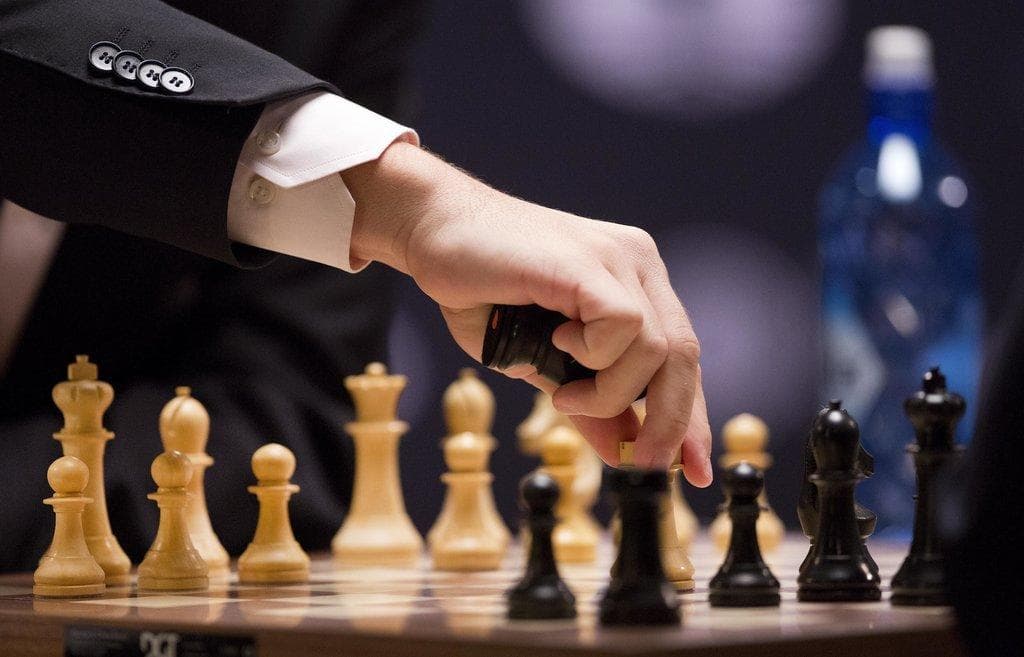
Chess and Commercial Real Estate: The Business of Thinking Three Moves Ahead
In chess, winning is not just about the move you make today. It is about anticipating what happens three moves ahead. Commercial real estate works exactly the same way.
Every successful chess player understands that a strong position, calculated decisions, patience and the ability to anticipate an opponent's strategy determine the outcome.
In commercial real estate, the same principles separate an ordinary property transaction from a successful real estate strategy.
Whether a company is establishing a new office, expanding its operations, setting up a Global Capability Centre (GCC), or an investor is acquiring a commercial asset, every decision has consequences beyond the immediate transaction.
Let's look at how chess principles translate into commercial real estate.
1. The opening move: Understanding the market
In chess, the opening establishes control of the board.
In commercial real estate, the opening move is market intelligence.
Understanding micro-markets and business locations.
Analysing rental trends and capital values.
Identifying existing and upcoming commercial developments.
Evaluating infrastructure and future connectivity.
Understanding employee accessibility and business requirements.
The right location is not simply where space is available. It is where business strategy and market opportunity meet.
2. Controlling the centre: Location is everything
In chess, controlling the centre gives a player greater flexibility and influence over the board.
In commercial real estate, strategic locations provide similar advantages.
For businesses in Hyderabad, locations such as HITEC City, Financial District, Gachibowli and Kokapet offer different advantages in terms of connectivity, infrastructure, workforce accessibility and future development.
A strategic location can influence:
Employee attraction and retention.
Operating costs.
Client accessibility.
Business expansion opportunities.
Long-term asset value.
Location is not just an address. It is a competitive advantage.
3. Protecting the king: Risk management and due diligence
A chess player never sacrifices the king for a temporary advantage.
Similarly, a business should never compromise its long-term interests for an attractive commercial property deal.
Real estate decisions require careful evaluation of:
Legal title and ownership.
Lease terms and contractual obligations.
Regulatory and statutory compliance.
Building approvals and documentation.
Hidden costs and financial commitments.
Exit clauses and future flexibility.
A property may look attractive on paper, but without proper due diligence, it could create significant commercial and legal exposure.
A good deal is not just about what you gain. It is also about the risks you avoid.
4. Every piece has a purpose: Choosing the right property
In chess, every piece has a different role. The queen offers flexibility, the rook controls files, bishops influence diagonals, and knights create unexpected opportunities.
Commercial real estate also requires the right combination of assets.
Grade A office spaces: For established corporates and enterprise occupiers.
Managed offices and coworking: For flexibility and faster market entry.
Built-to-suit developments: For businesses with specialised requirements.
Large office campuses: For GCCs and organisations planning long-term expansion.
Investment-grade commercial assets: For investors seeking rental income and capital appreciation.
The best property is not necessarily the most expensive or prestigious one. It is the property that serves the business objective.
5. Think three moves ahead: Future-proofing real estate decisions
An experienced chess player does not focus only on the current move. They anticipate possible scenarios.
Businesses should approach real estate in the same way.
Before signing a lease or acquiring an asset, consider:
Will the business require additional space in the next three to five years?
Can the location support workforce expansion?
Will the infrastructure meet future operational requirements?
Are the lease terms flexible enough to accommodate growth?
What happens if the business needs to relocate or consolidate?
For GCCs, this becomes particularly important. The initial office may accommodate 100 employees, but the organisation could eventually need capacity for 500 or more.
A short-term saving should never become a long-term operational constraint.
6. Timing is everything: Knowing when to make the move
In chess, making the right move at the wrong time can change the entire game.
Commercial real estate is equally sensitive to timing.
Market conditions, vacancy levels, rental movements, new supply, landlord expectations and infrastructure developments can influence negotiation outcomes.
For occupiers, entering the market at the right time can create opportunities to secure:
Competitive rental terms.
Better landlord incentives.
Flexible lease structures.
Suitable floor configurations.
Expansion options.
For investors, timing can influence acquisition pricing, rental yields and future appreciation.
The right opportunity is a combination of the right asset, the right price and the right timing.
7. The endgame: Creating long-term value
In chess, the endgame is where earlier strategic decisions determine the final result.
In commercial real estate, the endgame is not merely completing a transaction.
It is about what happens after the deal:
Is the property delivering the expected business value?
Is the asset generating sustainable rental income?
Is the occupier benefiting from the location?
Is the investment positioned for long-term appreciation?
Are there opportunities for portfolio optimisation?
Successful real estate advisory should look beyond transaction closure and focus on the long-term performance of the asset.
8. The winning strategy: The role of a real estate advisor
Chess players rely on preparation, analysis and strategic thinking. Businesses making significant real estate decisions need the same discipline.
A professional real estate advisor brings together market intelligence, property evaluation, negotiation expertise, due diligence and transaction management.
At Nandaka Real Asset Advisory, we believe commercial real estate decisions should never be driven by availability alone.
Our approach is built around understanding business requirements, evaluating opportunities, managing risks and identifying properties that support long-term business objectives.
We help occupiers, investors, landlords, developers and organisations navigate commercial real estate with informed decisions and strategic direction.
Final thought: Don't just make a move. Make the right move.
In chess, one wrong move can change the game.
In commercial real estate, one wrong decision can impact a business for years.
The difference between winning and losing often comes down to preparation, foresight and execution.
Think strategically. Evaluate intelligently. Move confidently.
Because commercial real estate is not just about finding space. It is about making the right move for your business.